
The stem cell chip is the child of two revolutions that met. One was microfluidics: in the 1990s, techniques borrowed from the computer-chip industry were turned to moving liquids, not electrons, through channels etched at the scale of a cell. The other was stem-cell biology, which kept discovering how powerfully a cell's surroundings decide its fate. Put the two together and a striking idea appears — if the surroundings are what matter, build the surroundings deliberately, at the cell's own scale, and you can not only grow cells but direct them. The organ-on-a-chip field that followed set out to reproduce living tissue function on these engineered surfaces, and it is still accelerating.
Stem cell chip — culturing, analysing and guiding stem cells on a slide
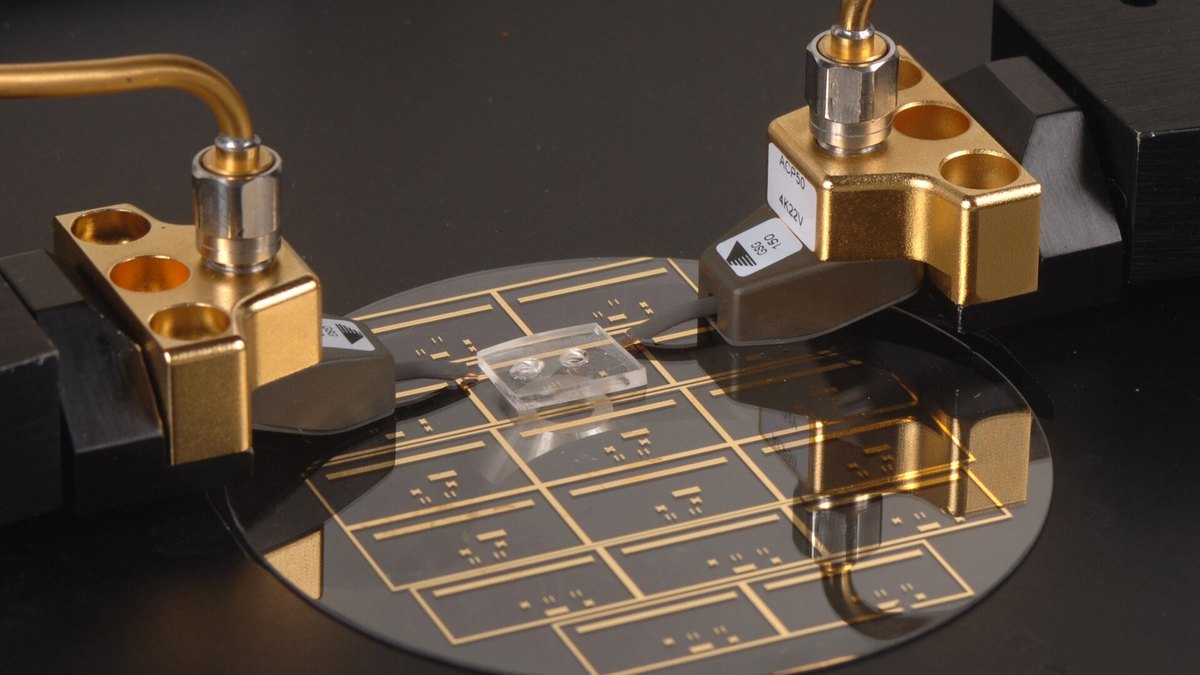
A stem cell chip is a microfluidic lab-on-a-chip that grows and studies stem cells inside channels no wider than a hair — and, by lining those channels with the right peptides, gently tells the cells what to become. Here is how it works, and where it is heading.
Abstract
A stem cell chip is a microfluidic device — a member of the lab-on-a-chip and organ-on-a-chip families — that cultures, feeds, images and analyses stem cells in tiny channels on a slide-sized platform. Because flow, nutrients and surface chemistry are all controlled precisely, a chip does with microlitres what a culture dish does with millilitres, and lets researchers watch the cells as they grow. A key trick is peptide functionalisation: coating the inner surfaces with short peptides — adhesion motifs such as RGD, or growth-factor-mimicking sequences — that present cells with tissue-like cues and gently steer their fate. This brief explains the technology and maps where it reaches. It is a beneficial scientific description, not medical advice.
Stem cell chip — at a glance
- What it is
- A microfluidic lab-on-a-chip that cultures and analyses stem cells on a slide
- Family
- Lab-on-a-chip · organ-on-a-chip · microphysiological systems
- Scale
- Channels tens of micrometres wide; microlitre volumes; single-cell resolution possible
- Peptide role
- Surfaces functionalised with adhesion / signalling peptides to guide cell fate
- Reads out
- Live imaging, on-chip qPCR / gene expression, secreted-factor sensing
- Points toward
- Personalised medicine · drug & toxicity screening · on-demand cell & peptide production
- Framing
- Beneficial-science · nothing here is medical advice
1. What is a stem cell chip?
A stem cell chip is a small, transparent device criss-crossed by microscopic channels through which fluid is pumped with great precision. Cells are seeded into chambers inside it, and the chip supplies them with nutrients, removes waste, and holds them where a microscope or sensor can watch. It belongs to the broader family of lab-on-a-chip and organ-on-a-chip systems — microphysiological platforms that recreate a slice of living tissue on an engineered surface1. Stem cells are a natural fit because they are precious, sensitive, and profoundly shaped by their surroundings: a chip gives fine control over exactly the surroundings that matter.
A culture dish gives cells a floor to sit on. A stem cell chip gives them a landscape — flow, gradients and surface cues — and lets you design what grows.
2. Peptides as the chip's instruction set
The most elegant part of a stem cell chip is often its chemistry. Living cells read their environment through the extracellular matrix — a web of proteins studded with short recognition sequences. Many of those cues can be reduced to a handful of amino acids, and synthesised as peptides. The best known is RGD (arginine–glycine–aspartate), the adhesion motif that tells a cell "hold here"2. By grafting RGD and other signalling peptides onto a chip's inner walls — and patterning which peptide sits where — researchers hand the cells a set of instructions written in chemistry: attach along this line, spread in this chamber, and lean toward becoming bone, nerve or vessel.
This is why "peptide" and "stem cell chip" belong in the same phrase. Peptides are how a chip speaks to a cell in the cell's own language, gently and locally, without harsh reagents. Tune the peptide surface and you tune the outcome.
| Peptide cue | Signal to the cell | What it enables on-chip |
|---|---|---|
| RGD motif | Adhesion — "anchor here" | Patterned attachment; cells organise where the surface invites them |
| Laminin-derived (IKVAV / YIGSR) | Neural-friendly matrix cue | Encourages nerve-lineage attachment and outgrowth |
| Growth-factor-mimetic | Differentiation nudge | Steers stem cells toward a chosen tissue path without flooding them with protein |
Peptide sequences above are named to illustrate the public principle of surface guidance; the exact coatings, patterns and protocols any given programme uses are its own. No dose or health claim is made.
3. What a chip lets you see
Because everything happens in a small, observable volume, a stem cell chip turns cell culture into something you can watch and measure continuously. Live imaging follows cells as they divide and organise. On-chip qPCR and gene-expression read-outs report which genes switch on as the cells differentiate. Sensors can track the factors the cells secrete. The result is a running record of a process that a bulk culture dish hides — the difference between reading a cell population's final state and watching the whole story unfold.
4. Why it matters — the open frontier
The stakes are large. Cell therapies and regenerative medicine depend on producing the right cells, in the right state, with their identity intact — and on knowing they are what they should be before use. A stem cell chip is a natural home for that work: it can test a candidate therapy against a person's own cells (personalised medicine), stand in for animal models as a microphysiological tissue for drug and toxicity screening, and serve as a compact factory-plus-microscope for making and checking cells on demand. The frontier is putting all of it together — culture, guidance, analysis and quality-checking — on one small, monitored device.
5. The origin story — biology onto silicon
6. Where the stem cell chip meets Panacea Bio Chem
Panacea's angle, honestly framed
Peptide chemistry, miniaturised biology, and making what's needed on demand
Panacea Bio Chem researches the chemistry that guides cells and the machinery that makes peptides on demand — the same two ingredients a stem cell chip depends on. The clearest connection is the Peptopod™ concept: a self-contained pod that brings qPCR, gene-transcription hardware, nanocameras, a microwave bioreactor and a micro-lyophiliser into one enclosure to build and analyse peptides where they are needed. That is microfluidic, monitored biology in the same spirit as a stem cell chip — biology shrunk onto a controlled, observable platform. Watching over such a system is the high-resolution S3Pulse™ engine, the same discipline of "measure everything, miss nothing" that a good chip demands.
The peptides a chip needs — adhesion and signalling sequences — are Panacea's home ground, and the cells a chip studies connect to Panacea's wider cell-science interests, from stem-cell purity and characterisation to urine-derived stem cells. Where a chip's output must be preserved and delivered, the Lyoprester® cartridge and EZnject™ pen carry it onward. This is stated as an active research direction; the specific chemistries and workflows are a proprietary Panacea matter held by Bogdan Dicoias.
Explore the science
Explore Panacea Bio Chem ↗This section describes a research interest, stated truthfully as ongoing. No product, outcome or health benefit is asserted here. Nothing here is medical advice.
7. Where the stem cell chip reaches furthest
Because it unites culture, guidance and analysis on one platform, the stem cell chip is a broad, high-leverage idea. Directions where it matters most include:
- Test on your own cells. A chip seeded with a person's cells lets a candidate approach be studied against that individual before anything else — the heart of personalised medicine.
- A tissue instead of an animal. Microphysiological chips give drug and toxicity screening a living, human-relevant model on a slide.
- Guided differentiation. Peptide-patterned surfaces steer stem cells toward chosen tissues with gentle chemistry rather than brute force.
- Make it where it's needed. Paired with compact synthesis and analysis, chips point toward producing and checking cells and peptides on demand — even far from a central lab.
These fields are offered as a map of scientific and product opportunity and future research direction, not as indications or advice.
8. The stem cell chip family — where to go next
This brief is the generic category door: what a stem cell chip is, how peptide surfaces guide the cells on one, and what a chip lets you measure. The Panacea network grows the idea in two coined directions, each with its own dedicated brief:
- PepStemChip™ — the peptide-centric sibling: an organ-on-a-chip built for peptides and stem cells, where the peptide itself is the candidate under test.
- StemsChip™ — the population-centric sibling: stem-cell expansion and differentiation testing inside a controlled, observable micro-environment.
- Purostem — the quality hand-off: how the identity and purity of the cells a chip produces are characterised.
PepStemChip™ and StemsChip™ are coined Panacea entities with their own briefs; this page stays the generic category introduction and links out rather than restating them.
Frequently asked
What is a stem cell chip?
A microfluidic lab-on-a-chip that cultures, images and analyses stem
cells in tiny channels on a slide, with precise control of flow, nutrients and surface chemistry. Nothing here
is medical advice.
How do peptides fit in?
The chip's surfaces are functionalised with short peptides — adhesion
motifs like RGD, or signalling sequences — that give cells tissue-like cues and steer their fate, turning
surface chemistry into a gentle instruction set.
Why use a chip instead of a dish?
A chip shrinks culture into a small, observable, precisely
controlled volume, so processes can be watched and measured continuously and with far less material — ideal for
personalised medicine, drug screening and single-cell study.
What is the Panacea connection?
Peptide chemistry for guiding cells and compact, monitored,
on-demand biology — the Peptopod concept and S3Pulse monitoring share the stem cell chip's spirit. It is an
ongoing research interest, not a product claim.
Trending in the field
Recent developments in the field — refreshed 2026-09-11 by Panacea Bio Chem.
- Applications of In vitro New Approach Methodologies (NAMs) in Drug Development: A Scoping Analysis of Titles of Nonclinical Study Reports Submitted to the FDA — PubMed, 2026 Sep 9
- Microfluidic Mechanical Reactivation of Senescent Stem Cells — PubMed, 2026 Sep 9
- SphereChip attaches spheroids and organoids to planar multielectrode arrays with microfluidics — PubMed, 2026 Sep 4
- New approach methodologies based prediction for pulmonary toxicity — PubMed, 2026 Sep
References & further reading
- Organ-on-a-chip and lab-on-a-chip microphysiological systems — recreating tissue function on microfluidic devices. Organ-on-a-chip (Wikipedia) · Microphysiological systems (PubMed).
- RGD and matrix-derived peptides for cell adhesion and fate guidance on engineered surfaces. RGD motif (Wikipedia) · PubMed.
- Microfluidic stem cell culture and single-cell analysis on chip. Microfluidics (Wikipedia) · PubMed.
- Stem cells, the extracellular matrix and how surroundings direct cell fate. Stem cell (Wikipedia) · PubMed.




